The Home Insurance building in Chicago built in 1885 is widely regarded as the world’s first skyscraper. There is only one problem, it isn’t true.
Out of curiosity I asked three AI search engines (Perplexity, Gemini and ChatGDP plus the Guinness Book of Records) what was the world’s first skyscraper. They all came up with the same answer: The Home Insurance building in Chicago. No surprise there. America is known as the land of skyscrapers (though these days it would be China) and Chicago was in the vanguard . But that isn’t the end of it. .
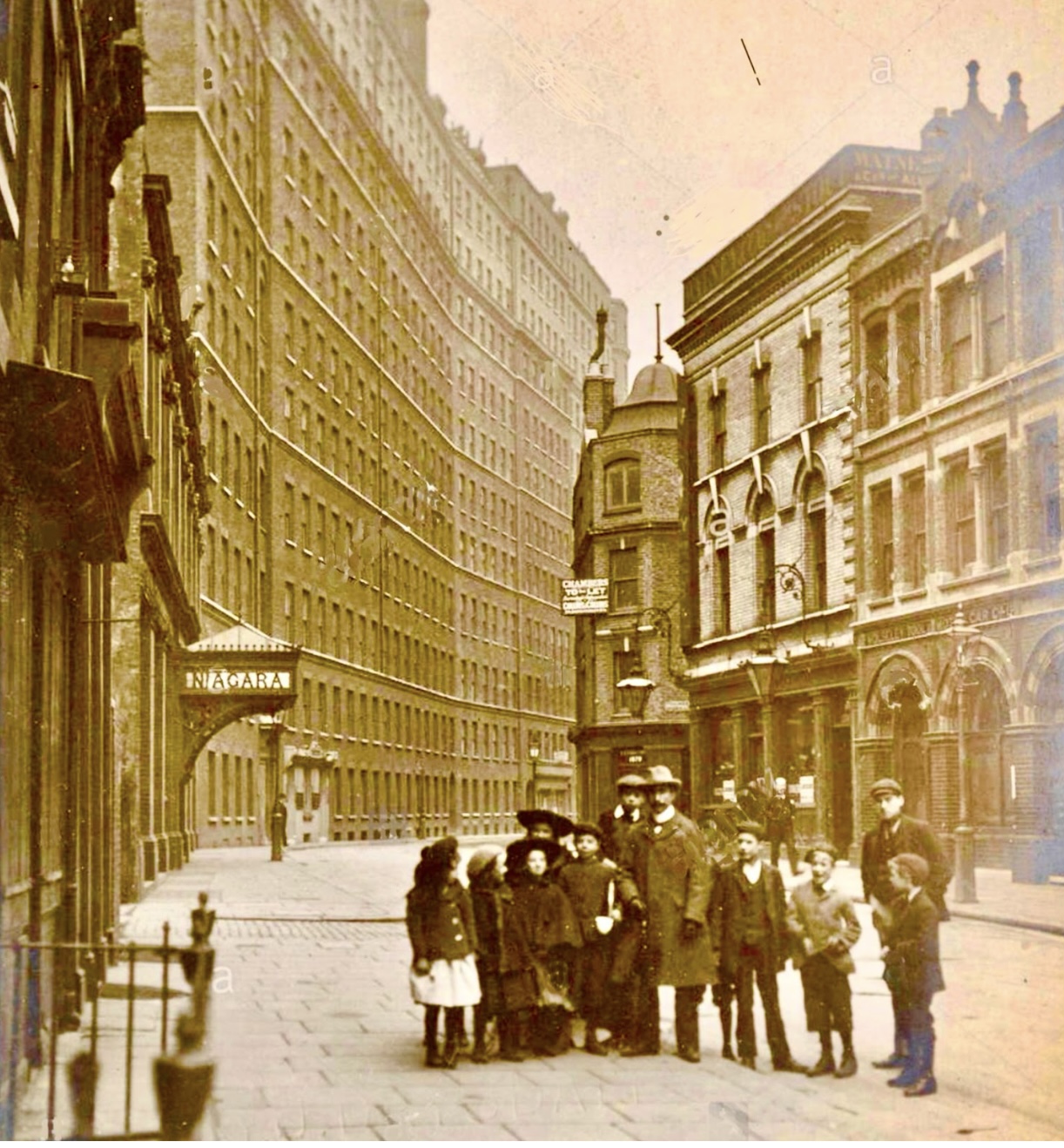
I have written before about Queen Anne’s Mansions in Petty France, London (picture above) for years without stopping to think of its context. After all, its initial height of ten to twelve storeys (116 feet) doesn’t seem very tall to us these days. It turns out that Queen Anne’s Mansions was not only bigger than the Home Insurance building but was constructed 10 years earlier.
It was the world’s first skyscraper. It was in Petty France, near St James’s Park station on the site where Sir Basil Spence’s brutalist Ministry of Justice (photo below,) soon to be another luxury hotel, is situated. It was on this same site that Queen Ann’s Mansions was built between 1873 and 1875 to a height of 10 storeys (35 meters) expanded to 12 storeys (43 meters) two years later. The Home Insurance building wasn’t until built eight years later in 1884/85 at 10 storeys in height initially.
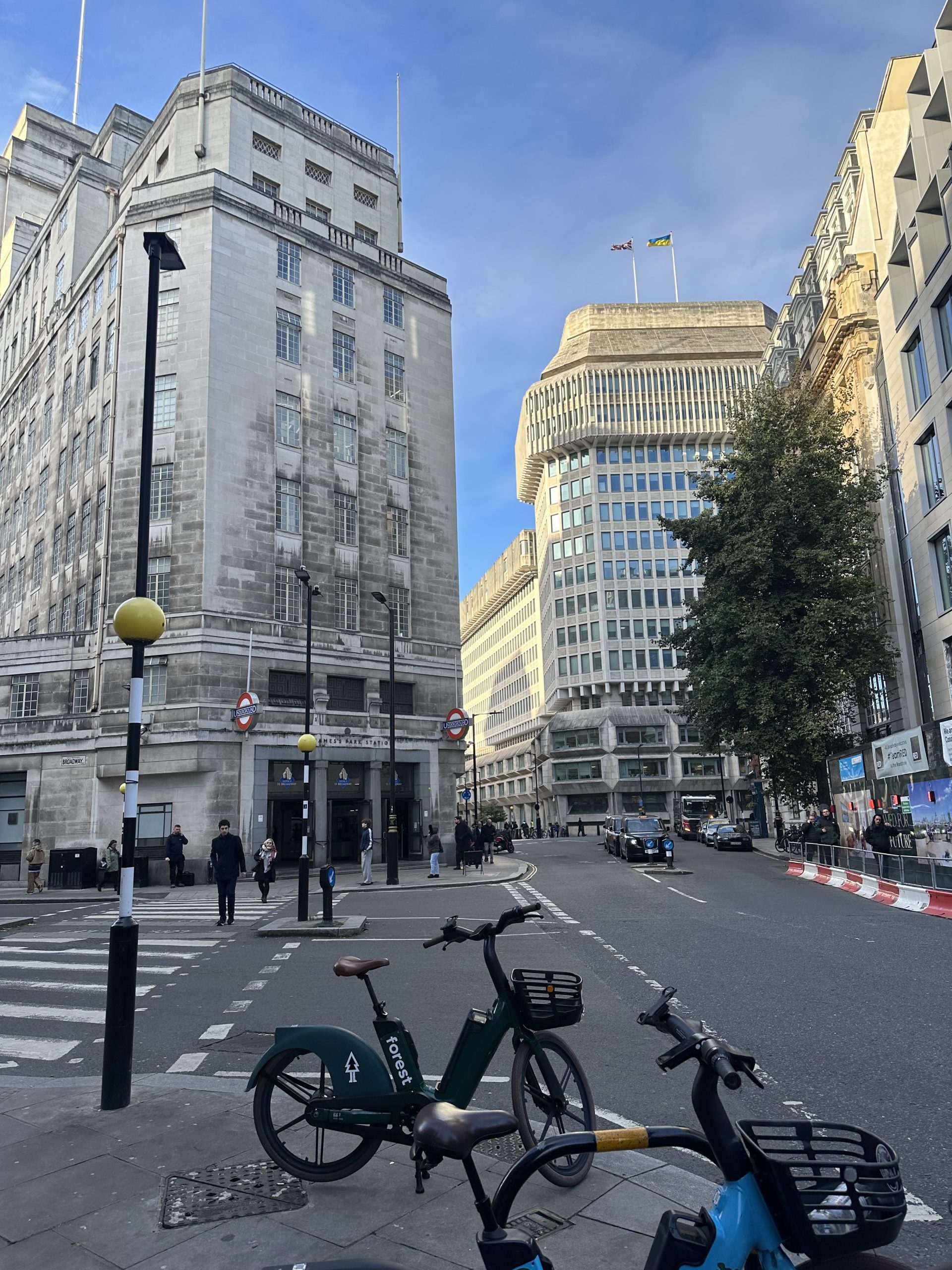
55 Broadway (left )-TheMinistry of Justice (right) site of Queen Anne’s Mansions)
Both buildings achieved widespread publicity for completely different reasons. The Home Insurance building because of its pioneering technology – internal structural steel within a metal – frame which became the template for all future skyscraper construction. The brick-built Queen Ann’s Mansions, financed by a dodgy City banker called Henry Hankey, sailed into a tsunami of controversy being over twice as high as other residential developments and constructed without any official permission. The fire brigade complained that their ladders wouldn’t be able to reach the upper storeys in the event of fire. The Times called it “an eyesore and a scandal”. The War Office complained about the effect on neighboring buildings. A local architect James Knowles said the mansions were “a byeword for their monstrous and overgrown ugliness” and that a proposed extension “would constitute an eyesore so offensive as would disgrace the whole neighbourhood of Westminster””. Queen Victoria was not amused either as it obscured the view of her beloved Parliament.
In the end the Government decided not to force the developer to pull it down but the furore led to the London Building Act of 1894, which imposed height restrictions on new buildings. The Home Insurance building, despite its historic importance, was pulled down in 1931, less than 50 years after it was built to make way for the much larger Field skyscraper.
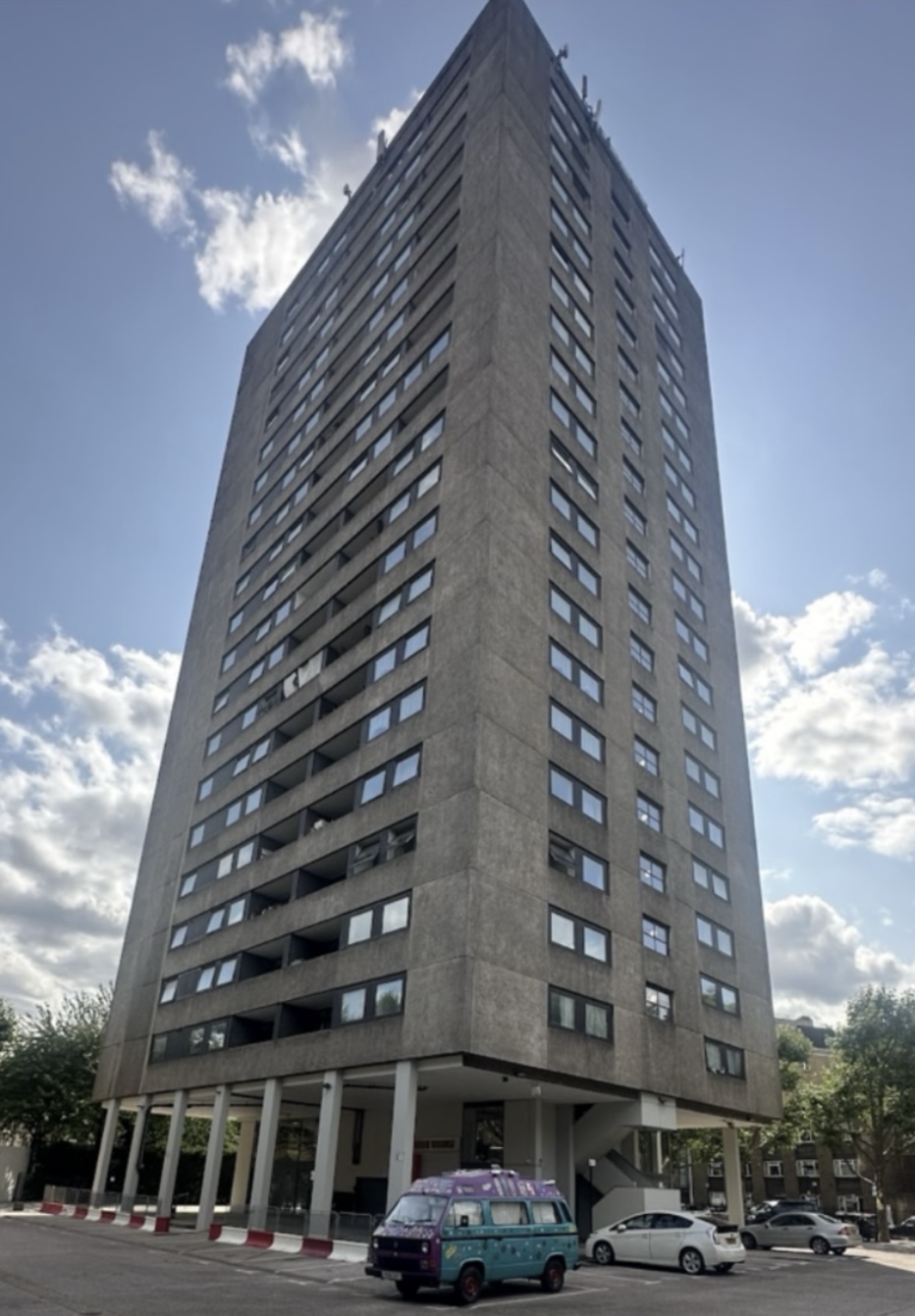
ScreenshotHide Tower Vincent Square
Meanwhile, London wasn’t standing still with regard to skyscrapers. 55 Broadway, on the other side of the road to Queen Anne’s Mansions was constructed between 1927 and 1929 and was the tallest office building in Britain at the time. It was for years occupied by London Transport and will soon be converted into a luxury hotel.
Not far away on the other side of the upmarket Vincent Square is Hide Tower which was extraordinary for another reason. It was nearly twice as high as Queen Anne’s Mansions (though completed much later in1961) yet hardly generated any serious controversy despite being the tallest residential building in Britain at the time and adjacent to the expensive houses and the playing field of an elite public school, Westminster. This was partly because it was built for older people , which pre-empted a lot of criticism, but mainly because it was part of a national cross-party surge to build more social housing in the wake of the Second World War. It was built by Conservative-led Westminster Council which later turned against social housing.
However that doesn’t alter the fact that this end of Westminster was endowed with a very successful upsurge of social housing including Churchill Gardens, Millbank Estate, Lillington Gardens and Page Srreet. Those were the days!
